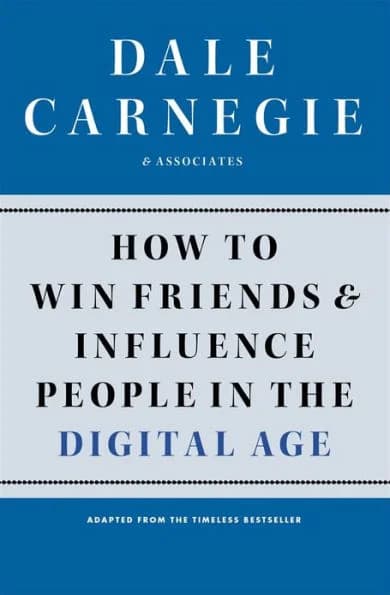
How to Win Friends and Influence People
By Dale Carnegie
ISBN: 9780671027032
Date read: 2023-06-10
How strongly I recommend it: 8/10
One engineer's condensed notes on every principle in the most-cited people skills book.
MY NOTES
"If you want to gather honey, don't kick over the beehive."
Don't criticize, condemn, or complain. Try to see it from their point of view first.
When you feel the urge to write the "destroy them" letter, write it, then don't send it. Think, "What would Lincoln do?"
The Big Secret of Dealing With People
Give honest, sincere appreciation.
People run on appreciation the way cars run on gas. If you want better behavior, spotlight what's right.
"He who can do this has the whole world with him. He who cannot walks a lonely way."
Arouse in the other person an eager want.
If you want someone to do something, make it something they want to do. Translate your request into their goals.
If you remember one thing: train yourself to see through other people's eyes. Career oxygen.
Do this and you'll be welcome anywhere.
Become genuinely interested in other people.
Being interested beats trying to be interesting. It builds friendships that actually last.
A simple Way to Make a Good First Impression
Smile.
A genuine smile is social gravity. It pulls people toward you.
Happiness isn’t something you find outside. It’s something you think into existence.
If You Don't Do This, You Are Headed For Trouble
A person’s name is the sweetest sound in any language.
Remember names. Use names. It’s low effort, high return.
An Easy Way To Become a Good Conversationalist
Be a good listener. Encourage others to talk about themselves.
Ask questions. Let them shine. “Be interested, not interesting.”
How to Interest People
Talk in terms of other people’s interests.
Let people talk about what they care about. Your job is to aim the spotlight, not stand in it.
How to Make People Like You Instantly
Make the other person feel important, and do it sincerely.
Find one real thing to appreciate. Say it. That’s the whole move.
You Can't Win an Argument
The best way to win an argument is to avoid it.
If you’re in disagreement, listen first, then find what you can honestly agree with.
A Sure Way of Making Enemies, and How to Avoid It
Respect opinions. Don’t say “You’re wrong.”
Admit you might be wrong. Then go look at the facts like adults.
If You Are Wrong, Admit It
Admit it quickly and empathetically.
Yielding often gets you more than fighting does. Owning it is rare. Rare reads as strong.
A Drop of Honey
Start friendly.
If you need to address something bad, begin with something nice and true. Anger makes you sloppy.
The Secret of Socrates
Get “yes” momentum.
Ask questions that lead to agreement instead of boxing them into defense mode.
The Safety Value in Handling Complaints
Let the other person do the talking.
If you want friends, let them feel bigger, not smaller. Let them excel you.
How to Get Cooperation
Let the other person feel the idea is theirs.
Ownership makes people cooperate faster than logic ever will.
Empathize with people. Put yourself in their shoes.
Be sympathetic with their ideas and values, even when you don’t share them.
The Movies do it. TV does it. Why don't you do it?
Dramatize your ideas.
Don’t just describe, show. Use examples. Make it vivid. People remember pictures, not paragraphs.
When Nothing Else Works, Try This
Throw down a challenge.
Make the work feel like a game. The work itself becomes the reward when it’s interesting.
If You Must Find Fault, This is the Way to Begin
Begin with praise and honest appreciation.
Start with what’s working so the correction doesn’t feel like an attack.
How to Criticize, and Not Be Hated for It
Call attention to mistakes indirectly.
Frame improvement as the natural next step, not evidence of failure.
Talk About Your Own Mistakes First
Lead with your own mistakes.
It lowers defenses and turns “you vs me” into “us vs the problem.”
No One Likes to Take Orders
Ask questions instead of giving orders.
People resist commands and cooperate with good questions.
Let the Other Person Save Face
Protect their dignity.
Do not let them lose confidence. Ever.
How to Spur People Onto Success
Praise the slightest improvement. Praise every improvement.
If you want change, reinforce progress, not failure.
Give a Dog a Good Name
Give people a fine reputation to live up to.
Identity is a lever. Use it.
Make the Fault Seem Easy to Correct
Use encouragement.
Make the correction feel doable, not crushing.
Making People Glad to do What You Want
Make the other person happy about doing the thing you suggest.
If it feels like their win, you don’t have to push.